Why Celebrity Deathmatch creator Eric Fogel believes his show is ‘timeless’ | Hollywood – Hindustan Times
In a world saturated with digital perfection and carefully curated celebrity personas, there was a time – a glorious, bloody, stop-motion time – when Hollywood’s biggest names duked it out in a literal ring of fire. We’re talking, of course, about MTV’s legendary Celebrity Deathmatch. A show that defied norms, ignited controversies, and left an indelible mark on an entire generation. And now, the mastermind behind this pop culture phenomenon, Eric Fogel, has weighed in on its enduring legacy, boldly claiming his creation’s ‘timeless’ appeal. And honestly? We’re here for it.
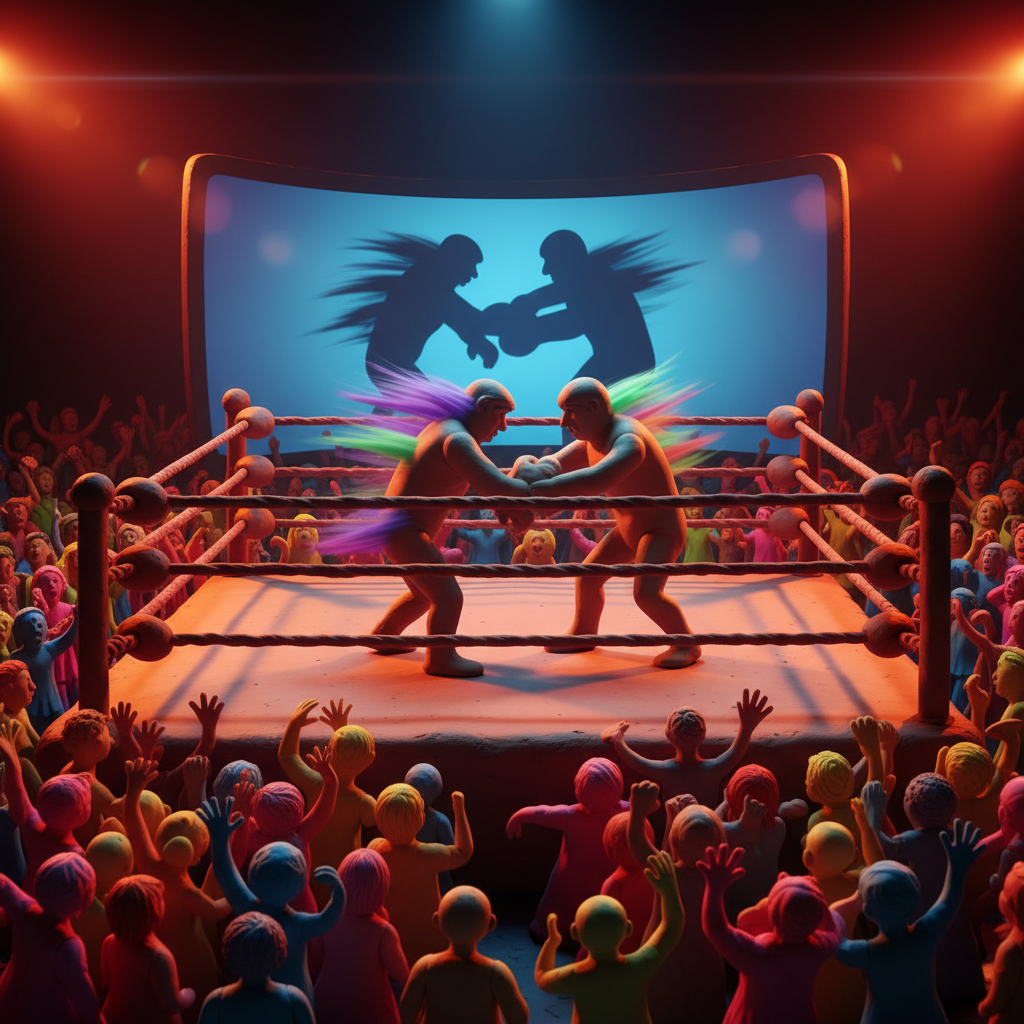
For those who might have lived under a rock – or were simply too young to witness the glory – Celebrity Deathmatch was a stop-motion animated television series where claymation versions of celebrities fought each other in brutal, often over-the-top, wrestling matches. Think Mike Tyson vs. Mr. T, or Madonna vs. Marilyn Manson, all animated with gleefully grotesque detail. It was satire at its most savage, tapping into the collective fascination with celebrity feuds and taking it to its most illogical, and hilarious, extreme. The show, which originally ran from 1998 to 2002 and was later revived from 2006 to 2007, became a cultural touchstone. It wasn’t just a cartoon; it was a societal commentary, a loud, squishy, clay-filled scream against the machine of celebrity worship. It dared to imagine the ultimate showdowns, the beefs we only whispered about, actually playing out in brutal, no-holds-barred combat.
The Unforgettable Appeal of Claymation Chaos
Fogel, speaking about the show’s lasting relevance, hit the nail on the head. In an era where content is king and nostalgia reigns supreme, Celebrity Deathmatch continues to find new audiences and resonate with older fans. Why? According to the visionary creator, it’s all about the show’s raw, unapologetic approach to lampooning fame. “The core concept of taking celebrities down a peg and exaggerating their personas,” Fogel explained, “that’s never going to go out of style. The specific celebrities change, but the underlying human fascination with fame and its absurdities? That’s timeless.” And who can argue with that?
Indeed, for a show crafted with arguably rudimentary (by today’s CGI standards) stop-motion animation, its charm and impact were anything but basic. The painstaking process of moving clay figures frame by frame infused each brutal punch and each grotesque dismemberment with a unique, almost tactile quality that modern animation often lacks. It was visceral in a way that CGI, no matter how flawless, sometimes fails to achieve. The blood was red, the bones crunched, and the facial expressions, despite being clay, conveyed an astonishing range of emotion, from smug confidence to abject terror. This handcrafted aesthetic was undeniably part of its magic, allowing for a level of exaggerated violence and caricature that felt both shocking and oddly endearing. It was a cartoon that dared to be messy, just like the lives and reputations of the stars it satirized.
From 90s Icons to Today’s Superstars: The Ever-Renewing Roster
Imagine Celebrity Deathmatch in today’s landscape. Who would be in the ring? The possibilities are endless, and that, Fogel suggests, is precisely why the show remains perpetually relevant. Back in the day, we saw bouts featuring the likes of *NSYNC vs. The Backstreet Boys, or Mariah Carey vs. Jennifer Lopez (a rivalry already brewing in real life!). Today, the fight cards would be epic: Taylor Swift vs. Kim Kardashian? Elon Musk vs. Mark Zuckerberg? The rock-solid feuds and viral moments practically write themselves. The show’s premise is a bottomless well of content, evolving with every new celebrity scandal, every burgeoning rivalry, every viral tweet that goes too far. It’s a show built to adapt, to absorb the latest trends and spit them out in a whirlwind of clay-based carnage.
Fogel’s genius lay in recognizing that celebrity culture itself is a constantly shifting, yet fundamentally repetitive, phenomenon. The faces change, the platforms evolve, but the core human drives – the desire for fame, the envy it breeds, the schadenfreude we feel when it all goes wrong – remain constant. Celebrity Deathmatch didn’t just capitalize on these drives; it celebrated them, twisted them, and served them up with a side of hilarious violence. It was a cathartic release for anyone who ever felt overwhelmed by the endless media circus surrounding their favorite (or least favorite) stars.
The Art of the Take-Down: Satire That Cuts Deep
What made Celebrity Deathmatch truly special wasn’t just the violence; it was the biting satire. Each character was a caricature, their most prominent traits exaggerated to glorious, often ridiculous, effect. Take, for instance, the legendary battles featuring ‘The Material Girl’ Madonna, whose insatiable desire for reinvention was often a key plot point, or the often-maligned rap-rockers Limp Bizkit, who were frequently portrayed as perpetually angry and confrontational. The show didn’t just smash clay figures; it smashed reputations, skewered public images, and highlighted the often-absurd disconnect between celebrity perception and reality. This sharp, incisive commentary, Fogel argues, is another pillar of its timelessness.
In an age where cancel culture looms large and public figures are scrutinized for every past misstep, the raw, unfiltered commentary of Celebrity Deathmatch feels strangely refreshing. It was a pre-internet version of a viral meme, a punchline that landed with precision, even if it took a few frames to get there. It held up a distorted mirror to society, showing us our own obsession with power, fame, and superficiality, all wrapped up in a delightfully gory package. The show understood that the best satire isn’t just funny; it’s uncomfortable, it’s revealing, and it makes you think, even if you’re laughing through the blood and guts.
Why Bollywood Would Have Been a Goldmine for Deathmatch
Now, let’s play a little ‘what if’ game. Imagine Celebrity Deathmatch with a Bollywood twist. The sheer drama, the larger-than-life personalities, the intense fan loyalties, and yes, the occasional simmering rivalry – it’s a goldmine! Fogel’s assertion about timelessness feels particularly true when we consider the Indian cinema landscape. The fan wars between adherents of Shah Rukh Khan and Salman Khan, or the legendary Box Office clashes that ignite social media, are ripe for a claymation showdown. Envision a match between two legendary actresses over a coveted role, or a brutal tag-team bout involving rival production houses. The storylines would be endless, the dialogues sharp, and the finishing moves absolutely iconic.
Think about the exaggerated dance moves becoming martial arts, the dramatic monologues turning into pre-fight taunts, and the opulent sets morphing into a battle arena. The cultural nuances and the intrinsic drama of Bollywood would elevate Celebrity Deathmatch to an entirely new level of magnificent absurdity. The show would not just be parodying individual celebrities, but also the entire ecosystem of Indian entertainment, from the paparazzi frenzy to the intense pressure of stardom. Imagine a ‘Mogambo’ style villain running the show, or a ‘Gabbar Singh’ sound-alike introducing the fighters. It would be a cultural phenomenon all its own, bridging the gap between Western satire and Eastern flair.
The Enduring Legacy: More Than Just a Cartoon
Fogel’s confidence in Celebrity Deathmatch’s timelessness isn’t just creator bias; it’s an astute observation of media consumption and human nature. The show tapped into something primal – our desire to see the mighty fall, even if just in clay form. It was a rebellious laugh at the expense of those often placed on pedestals. And in today’s hyper-connected, often unforgiving digital world, where every celebrity misstep is amplified instantly, the concept of a fictional arena for settling scores feels almost quaint, yet profoundly appealing.
The show’s impact extended beyond just entertainment; it influenced a generation of animators, satirists, and comedy writers. Its distinct style, its refusal to pull punches, and its audacious premise carved out a unique space in television history. It proved that animation wasn’t just for kids, and that satire could be both intellectual and outrageously funny. It paved the way for other adult animated shows that didn’t shy away from controversial topics or graphic humor. Celebrity Deathmatch taught us that sometimes, the most profound truths can be found within the most absurd scenarios.
Why We Still Crave Chaos: The Human Element
Ultimately, Celebrity Deathmatch’s enduring power lies in its understanding of the human condition. We are fascinated by conflict, by power struggles, and by the inevitable downfall of hubris. Celebrities, by their very nature, are heightened versions of ourselves, and watching them engage in exaggerated, violent combat is a form of catharsis. It allows us to momentarily escape the polite veneers of society and indulge in a primal fantasy of unrestrained conflict. Fogel understood this intrinsic human craving for chaos, channelled it through tiny clay figures, and created a classic.
So, is Celebrity Deathmatch timeless? Absolutely. As long as there are celebrities, as long as there are rivalries, and as long as there’s a human desire to laugh at the powerful, Eric Fogel’s bloody, brilliant creation will continue to find its audience. It’s a testament to bold vision, sharp wit, and the undeniable appeal of watching famous faces get their claymation butts kicked. And if MTV ever decides to bring it back, we’ll be there, popcorn in hand, ready for the next glorious, gruesome showdown. The world needs its dose of celebrity chaos, and Fogel’s creation delivered it perfectly, proving that some battles, even clay ones, are truly eternal.
Leave a Reply